Sunday, April 14, 2013

Motown The Musical @ The Lunt-Fontanne Theater


If you are going to do the classics, you had better do them right. So when portraying the golden age of Motown, who better to bring the songs that shaped a generation to Broadway then Berry Gordy himself? For decades Gordy brought music into the world that gave its fans hope in a time when it seemed as though nothing would ever be the same. Through the blessings of a talented cast, crew, and some of the greatest inspiration in music, Gordy with the help of director Charles Randolph-Wright (Love/Life) bring the spirit of Motown back to a world that is desperate for true music. 

 As the greats come back for Motown’s 25th year anniversary the character of Berry Gordy, played by Brandon Victor Dixon (The Color Purple) takes the audience all the way back to Hitsville, U.S.A. Back when Smokey Robinson wasn’t a household name, the Temptations hadn’t recorded “My Girl” and the “No-hit” Supremes were fresh out of high school. In a truly inspirational and jaw dropping production all the classics come out to play; Stevie Wonder, Smokey Robinson, Marvin Gaye, Diana Ross, Gladys Knight, The Temptations, The Supremes, The Marvelettes, The Jackson 5 – you name them, they were there. The audience sang along to every song, clapped every time a new character was introduced, the energy was charged, and one couldn’t help being transported back in time.   

Brandon Victor Dixon is not only a wonder to watch, but a wonder to listen to. He is the soul of the show, the peak of a talented cast and the perfect partner for Valisia LeKae (The Book of Mormon), who played Diana Ross. LeKae was charming, enticing, and embraced the soul of the great Diana quite beautifully. Charl Brown (Jersey Boys), who played a heart-warming Smokey Robinson, was incredibly funny and a true joy to watch.  Then of course the spirited Bryan Terrell Clark, who is making his Broadway debut in Motown the Musical, lent the ever radical and always changing view of the infamous Marvin Gaye. And naturally what would Motown be without the Jackson 5? Led by Raymond Luke, Jr., the group left the audience in awe with every song performed exactly as the original group had done. Luke brought the magic of the late, great King of Pop to the Lunt-Fontanne Theatre and that ladies and gentleman was an amazing sight.

           Go see it, and take it all in; the lights, the costumes, the set, the music. Go see how a generation was formed, and how Berry Gordy’s music changed the world. Notice how there is not one actor who does not embody their character; there is not one dull moment, not one dance step out of time, not one wrong note.
This is Motown; you are part of the family, part of the history, and part of the love.


Tuesday, April 9, 2013

F#%king Up Everything @ The Elektra Theatre


           Every feel like you just cant do anything right? Kind of like nothing ever goes right for you? Kind of like you're.......Fucking up Everything? Well, David Eric Davis and Sam Forman feel like that, so much that they wrote an enitre musical about how a group of people not only fuck up their own lives but also the people around them. F#%cking Up Everything is playing at the Elektra Theatre in the middle of Time Scare.

           F#@king Up Everything is a rock musical comedy with heart. Set in today’s Brooklyn indie music scene, it is an old-fashioned boy-meets-girl love story for the 21st Century. When these hipsters aren’t true to who they are, they fuck up everything. Especially love. And no one fucks up more than children’s puppeteer Christian Mohammed Schwartzelberg when he meets singer-songwriter Juliana, the girl of his dreams.

           This cast is full of extreme and ridiculous undiscovered talent that this theater is barely able to keep together. Lisa Birnbaum plays the sex driven music producer with high standards and tight cloths. Birnbaum doesn't make her appearance until about half way through the show but when she does, she arrives with great stamina and destroys the stage with her anthem "Fuck-It List".  Dawn Cantwell (Dogfight) plays the cute, quirky, hipster-geek Ivy. Cantwell steals the audiences heart as she struggles with feelings for her best friend Jake and he actual boyfriend Tony. Katherine Cozumel plays the free-spirited, hippie Juliana. Cozumel making her New York debut and fresh out of collage holds her own with in the new high energy show, simply wonderful. Max Crumm(Grease) makes his return to the New York stage as leading man Christen the awkward puppeteer nerd. Crumm is hysterical and just the perfect about of socially awkward. Jason Gotay (Bring It On: The Musical) plays Jake, the hot bad boy and best friends with nerd boy Christen. Gotay starts off the musical with a bang singing the title song, "Fucking Up Everything", and keeps up that outrageous energy throughout the entire performance. Rounding out the cast is Douglas Widick as Tony and George Salazar (Godspell) as Drummer. Widick and Salazar provide a secret love story that takes the audience by surprise, adorable.

Jen Wineman is responsible for making this ridiculous show look good. Being the Director and Choreography of this production, she would be to blame if anything went wrong or didn't look right; but she took this strange rock musical by storm and knocked it out of the park. Deb O did the set design, and she had to face a whole new string of problems, such as how to make it appear as if they were in different places in such a small theater.  O sure enough was able to pull it off by having things open and moving a car seat around for a change of scenery, without actually changing anything on stage. Joel E. Silver (Hair) did the light design, and he kept it nice and simple which let the material of this over the top musical stand out.

         So if in the city and feeling ambitious head over to the Elektra Theatre and don't miss out on the Indie Rock Musical, Located in the middle of Time Scare, NYC's year round haunted house.


Friday, April 5, 2013

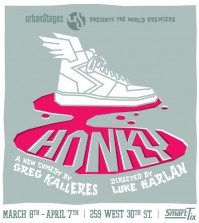
Honkey @ Urban Stages


WARNING: If Easily Offended Please Keep Clear Of Urban Stage’s HONKEY!

In a matter of a hundred and five minutes Greg Kalleres manages to fit every racial slur and offensive comment into his new comedy Honkey (does the title give anything away?). Truly nothing goes unexplored and no boundary is left uncrossed as the audience is witness to a story of how to use racial profiling to sell basketball shoes. Multiple character story lines intertwine in the aftermath of a murder of a young black man that was inspired by a sneaker add put forth by Sky Shoes.

            The show surrounds around racism and the idea that everyone is a racist; if you think you are one - you are, if you think you’re not one - you are. No one is safe from this train of thought – quite literally everyone in this show is a racist. And to add to the ridiculous nature of this play, if everyone is a racist then there must be a “cure”. 

             LADIES AND GENTLEMAN – Introducing DRISCOTOL – the miracle “cure” to racism. But watch out, there are side effects.

            The show starts out with an advertisement for the new SkyMax 16 basketball shoes. A shout out goes to Catie Hevner (Triassic Parq) for the projections that provided an interesting look to the show; using a simple set and relying on these projections to really set the scenes. As we come into the shows “corporate America”, we are introduced to Thomas, played by Anthony Gaskins (A Little Journey), the designer of the shoes in the commercial. Gaskins was enjoyable to watch with a decent sense of comedic timing, yet in his portrayal of this character he would at times present a “black man voice” during which his diction became loose and any point being made was lost to the audience. We are also introduced to Davis, the CEO/former CEO of Sky Shoes, played by Phillip Callen (Hard Times: An American Musical). Davis, when faced with his own racism seems at ease with it (anything to sell a shoe), but as the play progresses Callen becomes progressively more uncomfortable with the black members of the cast. Callen’s character has his funny moments and provides a laugh in these awkward situations.

            As the play moves forward we find Peter, the writer of the SkyMax16 commercial and his fiancé Andie, played by Dave Droxler (The Man Who Laughs) and Danielle Faitelson (No Fear Shakespeare’s Richard III). Both actors add to the plays ridiculous and offensive track quite nicely. Peter, who is dealing with “white guilt”, begins to see a therapist and starts to unravel under the pressures of racism – making his path not always clear, but very funny, while Andie, whose dialogue is a times confused but provides a ditzy, naïve humor, begins to have an affair with Thomas.

            And then of course there is the therapist Emilia, played by Arie Bianca Thompson. Described as a black girl embracing her whiteness, Thompson at first seems surrounded by this world without actually being invested in it. However as the play progresses we find that she is in fact one of the biggest racists in the show. And how does she deal with this? Driscotol of course!

            Dr. Driscoll, played by Scott Barrow (33 Variations), has found the cure to racism in his magic pill Driscotol, which Thompson’s, Callen’s, and Droxler’s characters all begin taking. Probably the shining moments in this play are the hallucinations that ensue as a side-effect of this drug. In terms of Callen, Davis is subjected to judgment by Frederick Douglas, although apparently Davis feels that it is appropriate to have Mr. Douglas speak in “gangster” terms. Douglas becomes the stereotypical gangster. This interaction is extremely offensive, but that stops no one from laughing. And then of course what would a play about racism and basketball shoes be without Abraham Lincoln? Think I’m kidding, I’m not. This gloriously ridiculous show not only provides one historical figure but two. And just to add a cherry onto this sundae it appears that Mr. Kalleres decided if Fredrick Douglas was going to be a gangster, Abraham Lincoln was going to be a pervert because it’s an obvious choice.

            All in all this show was hysterical and truly enjoyable to watch. However if the point was to get across some higher purpose of equality or serious message of racism then they need to try again.       

Thursday, March 28, 2013

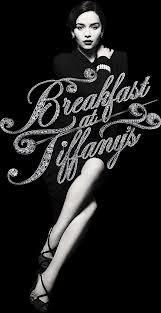
Breakfast at Tiffany’s @ Cort Theater


Sometimes, it is not always best if the guy gets the girl.  Richard Greenberg’s adaptation of Truman Capote’s Breakfast at Tiffany’s shows a young writer’s struggle, Fred, to overcome his seemingly hopeless love for his magnetic neighbor, Holly Golighty.  This production is quite artistically dynamic, and does a wonderful job of telling a classic story.

When most people think Breakfast at Tiffany’s, they immediately think of the image of Audrey Hepburn wearing sunglasses in the 1961 movie.  This production was based on Truman Capote’s novella, which tells a slightly different story.  Many of the iconic scenes, like the scene in which Holly talks about the cat not having a name, are in the play.  It is important however for audience members to remember that it is going to be different and not to expect a line by line reenactment of the film version.

With that said, different is not always a bad thing, especially in the case of this production.  One of the most successful aspects of this show was the scenic design, done by Derek McLane.  The apartments and the bar were both had very intricate and realistic design, but the truly impressive part was how the set was changed.  Large panels were moved across stage with images of buildings projected on them, making the characters seem as though they were moving through the city.  Projection designer Wendell K Harrington deserves a lot of credit nfor this as well, as the projections fit the style of the show very well, and the building projections had a very 50s feel to them.

Another area of the show that was very strong was the acting.  Corey Michael Smith makes his Broadway debut in this play as Fred, and it almost certainly will not be his last performance on the great white way.  Fred is a young writer trying to find his way through the city, and Smith does a wonderful job of finding the innocence of the character and his inability to catch up to the city life as fast as he should be in the beginning of the play.  He is easy to relate to, and his love for Holly can be very sad at times.  As the protagonist of this play, Smith does a great job of guiding the audience through the story, and his narrations do a great deal to clarify a story that could be a little confusing without him guiding the way.

Playing opposite of Smith was actress Emilia Clarke (HBO’s Game of Thrones), who played Holly Golightly.  Clarke’s performance was spot on.  She was just Hepburnish enough to keep the avid movie fans in the audience happy, and was also able to find her own ways to make the character of Holly as loveable and completely magnetic as she needs to be for this story to work.  

Probably the most famous member of this ensemble is George Wendt of Cheers fame, who played the character of bartender Joe Bell.  Joe Bell is the voice of reason Fred’s life, and Wendt does a very good job trying to steer Fred in the right direction.  There is a strong sincerity in his performance, it shows a different side of him than that which fans of Cheers are used to.

          Although the play is quite different than the movie, it is most assuredly a play that is worth going to New York to see.  It is a touching love story, and audiences of almost any age will be able to take something away from this play.


Friday, March 22, 2013

Hit the Wall @ Barrow Street Theatre


It is a daunting task putting a show like this into words -- fitting it all into this one review. Too often stories like this are passed over, forgotten, and made ‘unclear’, but when one person spreads the word we keep the memories alive. However, the fight for equality is still ongoing, and as the community moves towards its future we must remember the lessons of the past. Struggling to find acceptance in the world of 1969, members of the gay community in Greenwich Village, New York break out in riots of chaos and passion, and although reports of those nights in particular are ‘unclear’ we are exposed to those who stand up loud and proud, screaming, “ I WAS THERE!”

The action focuses on one night within the week of the Stonewall Inn Riots, June 27-28, 1969, the same night in which the city suffered some of the hottest days that summer and the funeral of idol Judy Garland. Following several intertwining stories, the play exposes the discrimination against gays at this time and shares those souls who were brave enough to speak out at the boiling point.

The Barrow Street Theatre, which has the home field advantage of being located in the historic Greenwich Village, provides an intimate arena stage. Aesthetic distance is non-existent as the audience becomes both participants and observers in this slice of history. The enclosed space allows for raw vibe that surrounds the audience and makes them feel as though they themselves are knee deep in the danger that surrounds them. The stage is set in Christopher Park and inside the Stonewall Inn. It is dressed with two double doors, back lit with a red wash. Two side-by-side windows with an amber backlight and blinds and a classic 1960’s sign that reads “Stonewall Inn Restaurant”.

The lighting fixtures remain general for most of the show, the design reflecting the underlying themes of seclusion, discrimination, and isolation with a rustic practical light above the inn’s entrance and within the inn – serving as police headlights bright, unfiltered lights blind the audience and add to the authentic sense of fear of persecution that seeps in and light focused on specific acting areas as they are in use. A prime example of this simple but effective design is the “Bathroom” scene, in which two characters are tortured and sexually molested. The soft, dull wash of the lights only adds to the jarring experience of witnessing such an event. Yet, the “riot” sequence is when this light design really shines, (get the pun?). Using colors similar to those used in an underground club -- saturated blues, reds, and purples, this scene provided a chaotic atmosphere that added a sense of freedom and was topped off by a strobe light which helped emphasis movement within the show.

            Carolyn Michelle Smith opens the show as Roberta, an outspoken women’s rights activist with a commanding presence. A proud “dyke” who believes in owning her labels Roberta provides the initial introduction to the rhythmic language of the play. Smith posses a vocal quality that not only sounds supported by is also inviting, which as the opening of the show remains a most important factor. As she becomes more intertwined within the show Roberta becomes a key voice in this machine and Smith does wonderfully.

            A true compliment to the contemporary vibe of the show lies within Arturo Soria (Tano) and Gregory Haney (Mika). These two partners in crime offer quick wit and a modern tonality in their language which helps to propel the characters and action forward. Soria, who is reprising his original role from the world premiere of “Hit the Wall” in Chicago, and Haney have a truthful and raw quality. Both actors prove to explore a deep space within their characters of how at this time one’s safety is always in jeopardy. Yet, in an otherwise serious drama, Soria and Haney offer a comic relief as well as a dramatic performance that keeps the audience invested.

            Nick Bailey offers a fresh innocence to the cast as Newbie. Bailey plays the new kid on the block, a rebel without a cause, a young man who learns to be what he is. “YOU WERE THERE—THERE WAS MUSIC EVERYWHERE … EVERYTHING I JUST SAID IS EXACTLY WHAT HAPPENED.”  Throughout it all, Bailey offers a perspective of a young man comfortable with who he is. The theme of hiding in not apparent in the Newbie, on the contrary, a nude streak in the middle of the “riot” scene points toward the opposite end of the spectrum. Bailey is brave and a joy to watch.

            In direct opposition to Bailey’s innocence comes Nathan Lee Graham’s character Carson. With the air of someone who has experienced much, Carson gives out a fragile air yet surrounds herself with a strong persona. Carson is a cross dresser, and on this night, the night of her idol’s funeral, Carson dreams of saying goodbye in her true self. Yet, with persecution and disdain around every corner she is forced to hide. “LOOK AT ME.” Graham transforms into a tragic character that undergoes great suffering – her suffering becomes one’s own as the audience is drawn into to Carson’s very real struggle. One is able to ride this emotional, turbulent, rollercoaster with a sense of great sadness. Graham’s work is good and it shows. 

            Peg, a “stone butch” lesbian, played by Rania Salem Manganaro, offers a look into the true unheard horrors of those nights. Manganaro puts forth a vulnerable young lesibian who is just looking for a way to make it on her own. Surrounded by the same discrimination engulfing her peers Peg is the first to speak out against the forces that suppress her. “NO MORE WATCHING.” Her spiritual and physical trails not only draw the audience in, but they also drag the audience down into the dark pit that most of these characters are forced to deal with in the week of these famous riots. Manganaro delivers a memorable performance that will stick with her audience for years to come.

            Rounding out the cast are the incredibly talented Jessica Dickey (Madeline), Ben Diskant (Cliff), Matthew Greer (Alex McArthur), and Sean Allan Krill (A-Gay). Also, providing life underneath the show is the Stonewall Band which includes Jonathan Mastro, Ray Rizzo, and Indigo Street. In an ensemble based show each character plays an intricate part in telling this incredible story. “I COULD NEVER LOVE YOU ONCE I KNEW – WHEN DID WE LOSE YOU?” “YOU DIDN”T LOSE ME, NOT ONCE. YOU LEFT ME!” “IT’S NOT OVER.” “CAN’T STOP, WON’T STOP.” “OUT OF THE CLOSET, INTO THE STREETS.”

            Yet, every show is only as good as its language. Holter provides a rhythmic, contemporary poetry in his dialogue that sets “Hit The Wall” apart from all the others. A modern tonality flows throughout this incredible production and its cast as they explore “reading” each other. “Reading”, according to Nathan Lee Graham, is a duel, a battle with words – an honorable combat between worthy opponents. However, along with “reading”, the music of the language gives it life and its poetic scheme lends a raw reality to this 1960’s atmosphere.

            So travel back and be exposed to this jarring, raw, bold production and put faith in the fact that once one surrenders to this world they will forever be changed. Listen up, speak, and be heard because history is important.